

Indoor biofuel fireplace: a guide to choosing and using one safely
Key Takeaways
An indoor biofuel fireplace gives you a real flame without a traditional wood-burning setup, but it still needs careful placement and operation. Check the specific model’s instructions before you buy or light it.
- Bioethanol burns to produce heat, water vapor, and carbon dioxide; ventilation still matters.
- “Ventless” means no chimney or flue is required, not that indoor air needs no consideration.
- Choose a model for your room, intended use, clearances, and preferred burn time.
- Use only manufacturer-approved fuel, and refuel only after the burner has cooled completely.
- Treat the flame as supplemental warmth and compare it with electric or other heating options.
How an indoor biofuel fireplace works
An indoor biofuel fireplace uses liquid bioethanol in a burner to create a visible flame. Unlike a conventional wood fireplace, it does not need logs or a chimney, but the flame is still combustion and requires sensible precautions. If you are new to the category, this overview of how ethanol fireplaces work can help you understand the basic setup. The exact operation and performance depend on the model, so its manual should guide your decisions.
How bioethanol fuel creates a flame
Bioethanol is a liquid fuel. In a fireplace designed for it, the fuel sits in a burner and its vapor catches fire when lit according to the manufacturer’s instructions. The burner’s construction and controls determine how the flame is contained and adjusted, so you should not assume all units operate in the same way. A real flame needs space around it and should be treated with the same care you would give any open flame.
What combustion produces, including heat and emissions
Burning ethanol releases heat, water vapor, and carbon dioxide. The amount of heat you feel in a room depends on the appliance, its settings, the room, and how long you run it; an attractive flame is not a reliable measure of heating performance. The broad differences between fuel types are useful to keep in mind when comparing fireplaces:
| Fireplace type | Fuel burned | General byproducts | Practical consideration |
|---|---|---|---|
| Bioethanol | Liquid ethanol fuel | Heat, water vapor, and carbon dioxide | Follow fuel and ventilation instructions for the specific model |
| Wood-burning | Wood | Heat, smoke, gases, and ash | Requires a suitable flue or chimney and ash handling |
| Gas-burning | Gas | Heat and combustion gases | Installation and venting requirements depend on the appliance |
The table is a starting point, not a substitute for product documentation or local requirements. Combustion conditions and appliance design matter, so consult the manual and take indoor air quality seriously rather than assuming any flame is emission-free.
How ethanol fireplaces differ from wood- and gas-burning models
An ethanol fireplace does not burn logs, so you do not need to store firewood or clear away wood ash. Many models are designed to operate without a chimney or flue, while wood and gas appliances commonly involve different installation and fuel-supply considerations. Those distinctions do not make every ethanol model portable or suitable for every room: built-in units can have specific construction requirements, and fuel must be stored and handled safely. Compare the actual appliance and installation instructions, not just the broad fuel category.
What “ventless” means—and what it does not mean
“Ventless” generally means a fireplace does not require a chimney or flue to carry combustion products outside. It does not mean the fire produces nothing, or that ventilation and room conditions can be ignored. Follow the manufacturer’s guidance on room suitability and ventilation, and check applicable local rules before installation. A guide to bioethanol fireplace safety is a useful companion when you are weighing these practical details.
Types and designs to consider
The right form depends on whether you want a movable feature, a built-in focal point, or a small decorative flame. A fireplace that looks simple to place may still require clearances and a suitable supporting surface, so check the model’s instructions before choosing a spot. Pay attention to how the flame will relate to seating, walkways, and nearby furnishings. These design categories are a way to narrow your search, not a substitute for checking the specific unit.
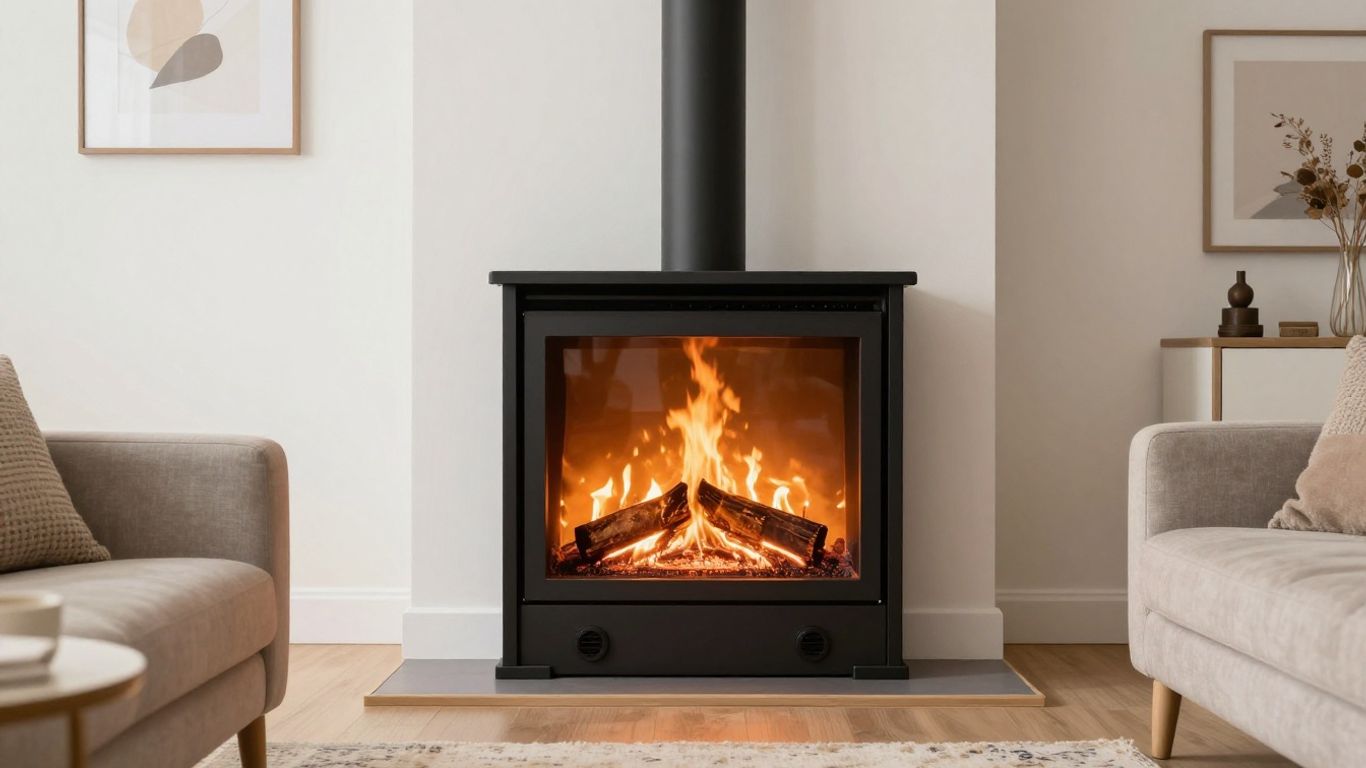
Freestanding fireplaces for flexible placement
Freestanding models can give you more flexibility than a built-in firebox, especially if you want to avoid a major construction project. That flexibility has limits: the unit still needs a stable position, required clearance from combustibles, and protection from accidental contact. For example, the EcoSmart BE Freestanding is described as a dual-sided fireplace for indoor and covered outdoor spaces, with no chimney, flue, or utility connection required. Check its full installation and safety instructions before deciding where it belongs.
Wall-mounted and recessed models for a built-in look
A wall-mounted or recessed fireplace can make the flame feel integrated with the room, but the visual effect depends on careful planning. Confirm the required opening, surround materials, clearances, and access for operation and maintenance before construction begins. Some units are designed for custom installations, while others are not; never assume that a product can be enclosed just because it is marketed as ventless. If the project involves a wall or cabinetry, have the installation requirements reviewed before work starts.
Tabletop units for smaller decorative flames
A tabletop fireplace may suit you if you want a compact accent rather than a room’s main heat source. Its smaller scale does not remove the need for a stable, level surface or safe distance from paper, fabrics, and other combustibles. Keep it away from table edges and places where people may reach across it. Before lighting, make sure the unit is positioned where it cannot be bumped and where the flame can be observed easily.
How burner size and flame controls affect heat output
Burner capacity and flame settings can affect both fuel use and heat output, but the numbers are model-specific. Compare the published burn rate and heat rating where available, and be cautious about drawing conclusions from burner dimensions alone. For a first pass, a burner sizing guide can help you think about room size alongside the burner’s stated output. Then check the specifications and operating instructions for the particular model you are considering.
How to choose the right fireplace
Start with what you want the fireplace to do: create a focal point, add a real flame to a room, or provide some supplemental warmth. Then work through the practical constraints, including room size, placement, fuel use, installation, and who lives in the home. A beautiful model is only a good fit if you can operate it safely and comfortably. Take time to compare the details rather than relying on appearance alone.
Match the model to your room size and intended use
Think about how you will use the fireplace and how often. A decorative flame for occasional evenings may call for different features than a unit you hope to run regularly for warmth. Room size and ventilation matter, and a model that works well in one space may be unsuitable in another. Be realistic about the role it can play: many ethanol fireplaces are best treated as a supplementary feature rather than a home’s primary heating system.
Compare heat output, burn time, and fuel capacity
Heat output, fuel capacity, and burn time help you understand what operating a model may be like. Published figures are usually tied to particular settings and conditions, so compare like with like and check how flame controls affect consumption. For instance, the Planika FLA4+ is listed with a larger fuel tank for up to 31 hours of burn time and six flame settings. Treat that as product-specific information, not a general expectation for ethanol fireplaces.
Check dimensions, clearances, and installation requirements
Measure the proposed location and compare it with the fireplace’s dimensions, clearances, and installation instructions. For a built-in model, confirm the opening and surrounding construction requirements before you start any work; for a freestanding model, consider the footprint and routes people use through the room. Make sure you can access the burner as directed for lighting, extinguishing, and cleaning. If anything in the manual is unclear, pause and seek qualified guidance rather than improvising.
Assess materials, construction, and included safety features
Look closely at how the fireplace is constructed and what safety features the manufacturer specifies. Check what is included, what must be purchased separately, and whether controls are manual or automatic. For example, the Planika NEO 750 is described as a built-in firebox with two flame settings and up to six hours of burn time, alongside several installation configurations. Those details describe that model only; compare the documentation for each fireplace on your shortlist.
Fuel, running costs, and maintenance
The purchase price is only part of the cost of owning an ethanol fireplace. You will also need to consider the approved fuel, how often you expect to use the unit, and the care its burner requires. Fuel prices and usage vary, so estimates are most useful when they are based on a specific model’s stated burn rate. Keep the manufacturer’s instructions close at hand throughout ownership.
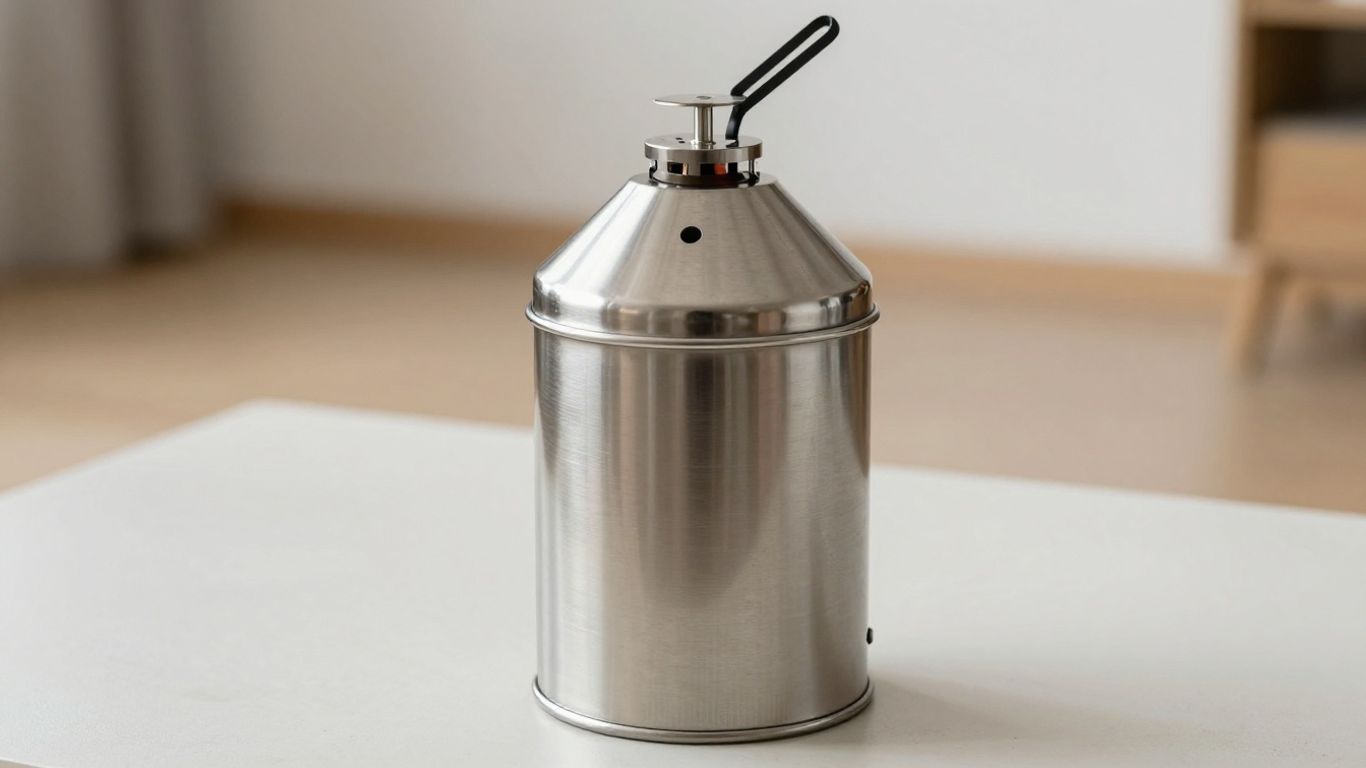
Choose fuel approved by the fireplace manufacturer
Use only the fuel specified or approved by the fireplace manufacturer. Different products may have different requirements, and substituting another liquid can create serious hazards or damage the burner. Read the label and manual, store fuel as directed, and keep it away from the flame and sources of heat. If the required fuel is not clear, confirm it with the manufacturer or retailer before buying or filling the appliance.
Estimate fuel use from burn rate and typical operating hours
To estimate fuel use, start with the fireplace’s stated burn rate and the number of hours you expect to run it. Multiply the approximate rate by your typical operating time, then adjust for the flame setting if the manufacturer provides separate figures. As a simple example, a model that uses more fuel per hour will consume more during the same evening than one with a lower stated rate. Treat the result as an estimate, since actual use can vary with settings and conditions.
Compare ongoing fuel costs with the fireplace’s purchase price
For a realistic budget, compare the initial price with expected fuel use over a month or season. You can estimate a period’s fuel cost by multiplying the amount you expect to use by the price you pay per unit, then adding any other product-specific expenses. This will not tell you whether the fireplace is “worth it” on its own; that depends on how often you use it and how much you value the flame, design, and supplemental warmth. Checking burn-time claims against your likely routine can make the comparison more useful.
Clean the burner and inspect components as directed
Wait until the appliance is extinguished and cool before cleaning or inspecting it. Follow the manufacturer’s method and use only the materials it recommends; avoid scraping, disassembling, or altering parts unless the manual says to. Regularly check visible components for damage or residue and stop using the unit if anything appears unsafe. Good maintenance is simple but specific to the design, so generic cleaning advice should never override the product instructions.
Installation and safe operation
Safe use begins before the first flame: choose the right location, understand the manual, and make sure the fireplace is appropriate for your home. Requirements can vary between models and jurisdictions, so do not assume that a ventless label settles questions about installation or local compliance. Keep children and pets in mind as you plan the room. For more detail, use product-specific guidance and ask a qualified professional when the installation calls for one.
Follow the manual and local building and fire codes
Read the full manual before assembly, installation, or operation, and follow the directions for the exact model. Check the building and fire requirements that apply where you live, including any conditions that affect a built-in installation. A retailer’s general advice cannot replace local approval or the manufacturer’s instructions. If requirements appear to conflict or are unclear, resolve that before installing or lighting the fireplace.
Keep required clearances from furniture, curtains, and other combustibles
Respect the clearances stated by the manufacturer, including distances above and around the flame. Keep curtains, furniture, décor, paper, and other combustible items outside those zones, and do not place objects where they could fall into the fire. Allow for everyday movement too: a safe position should not put the flame beside a busy walkway or where someone may brush against it. Recheck the area whenever you rearrange the room.
Refuel only when the burner is fully extinguished and cool
Never add fuel to a lit or hot burner. Extinguish the flame using the method specified in the manual, then wait until the appliance is fully cool before refilling. Handle and pour fuel carefully, keep the container away from the fireplace while it is burning, and clean up spills as directed before lighting. If you are unsure whether the burner is cool or fully extinguished, do not refuel it.
Use ventilation and never leave a burning fireplace unattended
Follow the manufacturer’s ventilation instructions and do not leave a burning fireplace unattended. A short routine can help you avoid rushing through the important checks:
- Confirm that the fireplace is stable and correctly positioned.
- Move combustible objects beyond the required clearances.
- Check that the burner and fuel are being handled as the manual directs.
- Extinguish the flame and allow the unit to cool before leaving it or refuelling.
These checks do not replace the manual, but they make its key precautions easier to remember. Keep the fireplace in view while it is burning, and make sure everyone in the household knows not to touch or refuel it.
Limitations and alternatives
An ethanol fireplace can bring the look and movement of a real flame to a room, but it will not suit every household or heating need. The flame involves combustion, the appliance needs attention while operating, and running costs depend on how much you use it. Consider your room, household routines, and expectations together before choosing. If any of those factors point elsewhere, there are other ways to add warmth or a flame effect.
Understand that a decorative flame may provide limited room heating
A fireplace’s appearance does not tell you how much useful heat it will provide. Check the manufacturer’s output figures and think about the size and layout of the room, but avoid treating a decorative flame as a substitute for a properly sized heating system. If consistent warmth is your main goal, compare the fireplace’s stated performance with the needs of the space. Its best role may be atmosphere and supplemental heat rather than whole-room heating.
Consider indoor air quality and household ventilation
Because ethanol combustion produces carbon dioxide and water vapor, indoor air quality and ventilation deserve attention. Follow all room-use and ventilation directions for the particular model, and do not assume that the absence of a chimney means no combustion products are present. If someone in your home is especially sensitive to changes in indoor air, think carefully about whether operating a real flame is appropriate. When in doubt, ask a qualified professional for advice specific to your home.
Check whether the model suits homes with children or pets
A real flame and a hot burner require a household plan, especially where children or pets can reach the appliance. Consider whether you can maintain the required clearances and prevent accidental contact during normal activity. Barriers or supervision may be appropriate, but only if they do not conflict with the manufacturer’s directions or create another hazard. If you cannot reliably keep the unit out of reach, choose a different option.
Compare electric fireplaces and other options for your needs
An electric fireplace may be worth considering if you want a flame effect without burning liquid fuel. Other heating options may make more sense if dependable room heat is your priority. Compare the way each option operates, its installation needs, and the costs you expect to incur, rather than assuming one type is right for every home. Your best choice is the one that matches your space, safety needs, and intended use.
Conclusion
An indoor biofuel fireplace can add a real flame to your home, but the right choice depends on more than design. Check the model’s fuel, output, installation requirements, and safety instructions, then consider whether its operating routine and level of warmth suit your household. With realistic expectations and careful use, you can decide whether this style of fireplace belongs in your space.
Frequently Asked Questions
Does an indoor biofuel fireplace need a chimney?
Many ethanol fireplaces are designed to operate without a chimney or flue, but installation requirements vary. Check the model’s manual and local rules before choosing a location or beginning installation.
Does a bioethanol fireplace produce emissions?
Yes. Burning ethanol produces heat, water vapor, and carbon dioxide. Follow the manufacturer’s instructions on ventilation and room suitability.
Can an ethanol fireplace heat a whole room?
That depends on the model, its output, and the room. Many are best treated as sources of supplemental warmth rather than a home’s primary heating system.
How do I estimate how much fuel I will use?
Use the manufacturer’s stated burn rate and your expected operating hours as a starting point. Your actual use may vary with the flame setting and conditions.
When is it safe to refill the burner?
Only after the flame is fully extinguished and the burner has cooled completely. Follow the manufacturer’s procedure, and never add fuel to a lit or hot appliance.
Is a ventless fireplace safe to use indoors?
“Ventless” means that a chimney or flue is not required; it does not mean that you can ignore ventilation or other safety instructions. Use the appliance only as directed and confirm it is suitable for your room.
Are bioethanol fireplaces suitable for homes with children or pets?
They may be unsuitable if you cannot keep children and pets away from the flame and hot components. Consider household routines, required clearances, and the manufacturer’s safety guidance before deciding.