

How to choose a biofuel fireplace retailer NZ homeowners can trust
Key Takeaways
Choosing a biofuel fireplace retailer is about more than finding a style you like. Check that the product suits your space and that you can get clear answers before and after purchase.
- Match the fireplace type and heat output to the room or outdoor area.
- Compare product specifications, fuel requirements, and installation guidance.
- Read the manufacturer’s safety instructions and confirm clearances.
- Estimate ongoing fuel and care costs using product-specific information.
- Compare written quotes, policies, delivery details, and independent feedback.
Understand what a biofuel fireplace can offer
A biofuel fireplace can add a visible flame without relying on a conventional wood-burning setup, but the right choice depends on how you want to use it. Start by learning what the unit needs, what kind of warmth it provides, and whether it fits your room or outdoor setting. A retailer should help you understand those trade-offs rather than treating every model as suitable for every home. Use the details below as a starting point for questions, not a substitute for the instructions supplied with a specific fireplace.
How ethanol biofuel fireplaces work
Ethanol fireplaces burn liquid bioethanol in a burner designed for that purpose. The flame comes from the fuel itself, so there is no wood to load; however, you still need to follow the product’s fuel, lighting, and operating instructions carefully. Models differ in their burner design and controls, so avoid assuming that one model’s procedure applies to another. Ask the retailer to explain which fuel is specified for the fireplace you are considering.
What to expect from heat output
Treat a biofuel fireplace as a source of warmth whose effect depends on the model and the room, not as a guaranteed whole-home heating solution. Room size, ceiling height, insulation, and air movement can all affect how warm a space feels. Check the manufacturer’s stated output and recommended room conditions, and compare that information with your intended use. You can also read this heat-output guidance to help frame questions about room size and warmth.
A retailer should be able to discuss the specific model rather than rely on a broad promise that a fire will heat any space. If you need dependable heating throughout a large or open-plan home, weigh that need separately from the appeal of a visible flame.
Indoor and outdoor models compared
Indoor and outdoor fireplaces are designed for different settings, so confirm the intended use before comparing finishes or prices. Outdoor models may be exposed to weather and wind, while indoor models need to be used in accordance with their ventilation and clearance instructions. Some product ranges include options for both settings, but that does not mean a particular model is interchangeable between them. Naked Flame offers indoor and outdoor bioethanol fireplaces, so you can explore options by intended setting and ask which models suit your plans.
When a biofuel fireplace may not suit your space
A fireplace may not be the right choice if the intended location cannot meet the manufacturer’s clearances or other operating requirements. It may also fall short if you expect a decorative flame to replace a primary heating system, or if you cannot store and handle fuel as directed. Consider your household routines, including whether children, pets, or frequent movement make the proposed location impractical. It is better to pause and resolve those concerns before buying than to adapt the space around an unsuitable model.
Check the retailer’s products and expertise
A useful retailer makes it possible to compare real specifications, not just photographs and broad descriptions. Look for details that let you judge dimensions, installation type, fuel, and intended setting, then ask for clarification where anything is missing. A showroom or product listing can help you picture a design, but neither replaces a model-specific explanation. The aim is to find a retailer whose information helps you make a considered choice.
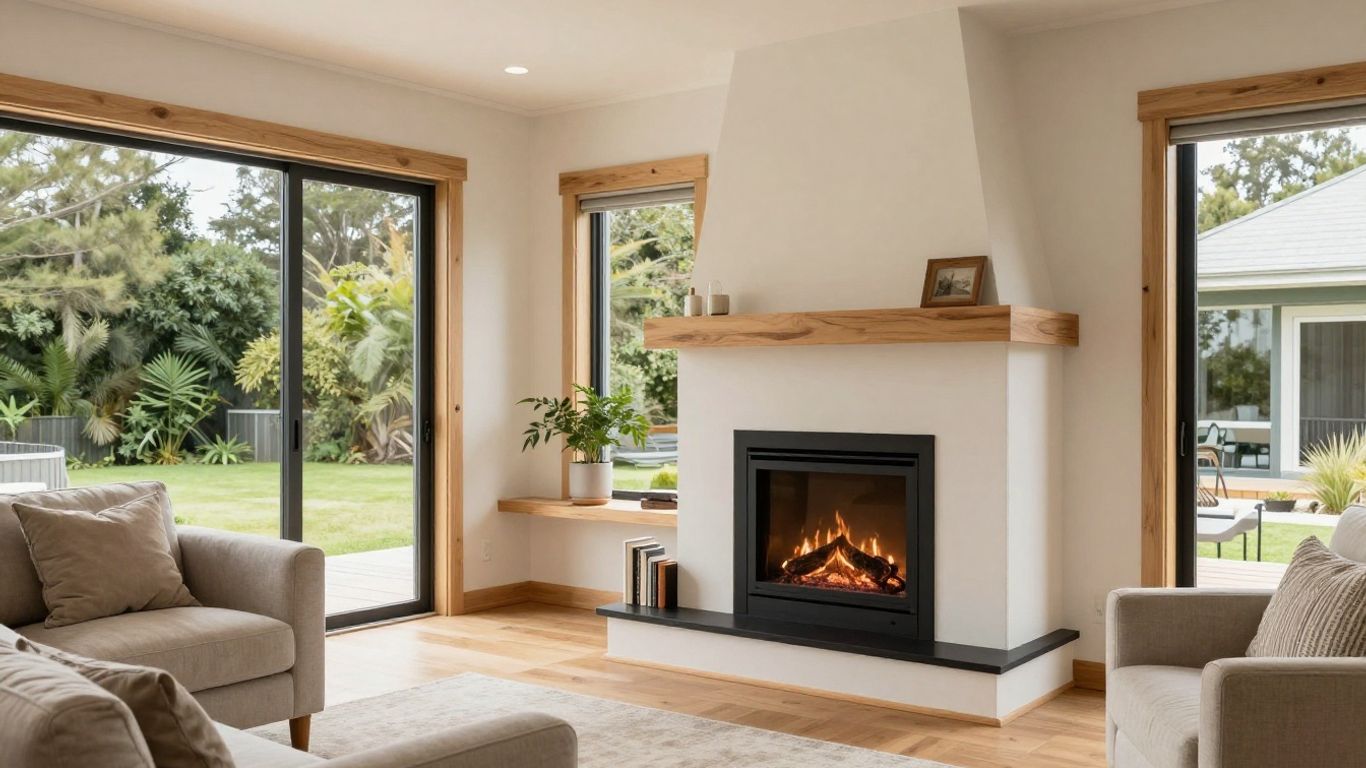
Look for clear product specifications
For each model, look for dimensions, fuel type, burner capacity or fuel-use information where provided, stated heat output, and the recommended setting. The product information should also make clear whether the fireplace is freestanding, built-in, wall-mounted, or suspended. Naked Flame offers EcoSmart Fire options for indoor and outdoor settings; compare the model details against your space rather than assuming the whole range has identical requirements. If a key specification is missing, ask for it in writing before proceeding.
Compare styles, sizes, and installation types
Choose the installation format with your room and intended use in mind. A freestanding unit offers a different kind of placement flexibility from a built-in firebox, while a suspended design has its own location and mounting considerations. To keep an early shortlist manageable, compare a few basics side by side:
- Overall dimensions and the space needed around the unit.
- Whether it is freestanding, built-in, wall-mounted, or suspended.
- Whether the manufacturer specifies indoor use, outdoor use, or both.
- The visual style and flame presentation you prefer.
These points help you narrow the options before getting into finishes and finer design details. Once you have a shortlist, confirm that the installation and clearances work for your actual location.
Ask about fuel compatibility and availability
Fuel compatibility is a practical question, not a detail to leave until after delivery. Ask what fuel the manufacturer specifies, whether it is readily available where you live, and how it should be stored. Naked Flame lists 20L bioethanol fuel with nationwide delivery; check the product information and delivery details to determine whether it suits your fireplace and address. Do not substitute another fuel based only on a similar label or an informal recommendation.
Check whether the retailer offers guidance after purchase
Good guidance should help you understand operation as well as selection. Before buying, ask who you can contact with questions about the manual, routine care, or a part that needs replacing, and what the retailer can and cannot assist with. Naked Flame publishes bioethanol fireplace guides for people choosing and using these fireplaces. A helpful resource is a useful start, while the manufacturer’s instructions remain the reference for your specific model.
Assess safety and compliance information
Safety information should be part of the buying decision from the beginning. A retailer’s explanation can help you identify the questions to resolve, but the fireplace manufacturer’s instructions provide the model-specific directions. Read those instructions before purchase if possible, and confirm that the proposed site can meet them. When you are unsure about local requirements or the suitability of a location, seek qualified advice rather than guessing.
Review manufacturer safety instructions
Ask for the manual or safety information for the exact model you are considering. Read the directions for fuel, lighting, operation, and care, and check whether any accessories or protective measures are specified. Do not assume that a feature described for one fireplace applies across a product range. If the guidance is unclear, request an explanation before you commit to the purchase.
Confirm ventilation and clearance requirements
Every proposed location needs to be checked against the manufacturer’s ventilation and clearance instructions. The required space can vary by model and by the materials and surfaces nearby, so a generic measurement from another fireplace is not enough. Ask the retailer to point out the relevant guidance in the product documentation, then measure the site against it. If you cannot satisfy the requirements, choose another location or model.
Understand fuel storage and handling
Fuel handling deserves the same care as fireplace operation. Follow the manufacturer’s directions for storage and handling, and keep fuel away from heat sources and from anyone who should not access it. Ask how much fuel is appropriate to keep on hand and whether there are specific container or storage instructions for the product. Never refuel a fireplace while it is operating or still hot; follow the manual’s directions on when refuelling is safe.
Ask how the fireplace should be extinguished
The correct extinguishing method depends on the design, so ask for the exact procedure for your chosen model. Find out what controls or tools are supplied, how to tell that the flame is out, and what the instructions say to do if it does not go out as expected. Do not use water or improvise a method unless the manufacturer specifically directs you to do so. Familiarity with the shutdown procedure should be part of learning to operate the fireplace, not something you discover in a hurry.
Compare running costs and ongoing care
Purchase price is only one part of the cost of owning a biofuel fireplace. Fuel consumption, local fuel prices, routine cleaning, and access to parts can all affect the longer-term picture. Ask for information tied to the model you are considering, and be cautious about estimates that do not explain their assumptions. Comparing like with like will make a retailer’s quote easier to assess.
Estimate fuel use from product details
Use the manufacturer’s stated burn time or consumption information, if provided, to estimate how often you might need fuel. Your actual use will depend on the burner setting and how frequently or how long you run the fireplace, so treat an estimate as a planning aid rather than a promise. A simple comparison of the details to gather can keep those estimates grounded:
| Detail to compare | What to check | Why it matters |
|---|---|---|
| Fuel consumption | The model’s stated rate, if available | Helps estimate fuel used during operation |
| Burn time | The stated range and conditions | Helps you understand how often refuelling may be needed |
| Fuel capacity | The model’s specified capacity | Provides context for the stated burn time |
| Use pattern | Your expected hours of operation | Makes a personal estimate more realistic |
Use the same assumptions when comparing two models, and ask the retailer to explain any figures that are not clear. That way, your estimate reflects product information and your likely routine rather than a single headline number.
Compare fuel prices and local availability
Fuel costs depend on the price and pack size available to you, as well as how much fuel your chosen model uses. Check shipping charges and delivery coverage if you are ordering rather than buying locally. Confirm the fuel type against the manufacturer’s instructions before using a retailer’s availability information to estimate your budget. It is sensible to check supply before purchase, especially if you live outside a main centre.
Factor in cleaning and maintenance
Ask what cleaning and routine maintenance the manufacturer requires, how often it should be done, and whether any parts are consumable. The time and products involved can differ between models, so a general statement that a fireplace is easy to care for is not enough to plan around. Read the care instructions and consider whether the process fits your household routine. Keep any maintenance records or product guidance with the manual for later reference.
Check warranty terms and replacement-part access
Before ordering, read the warranty terms and confirm what is covered, for how long, and what conditions apply. Ask who handles a warranty query and how to obtain replacement parts if they are needed. Get answers in writing where possible, particularly if a verbal explanation differs from the published terms. Clear policies make it easier to understand what support is available after the sale.
Plan the fireplace for your space
A design that looks right in a picture still needs to work in the room where you plan to use it. Measure the location, consider how people move around it, and compare those details with the model’s requirements. If the fireplace needs installation, make sure you understand the work involved before arranging delivery. Taking these steps early can prevent a good-looking choice from becoming an awkward fit.
Measure the intended location
Measure the available width, height, and depth, including the space the fireplace needs around it. For built-in or suspended options, check the dimensions of the opening or mounting area as well as the finished unit. Compare your measurements with the product specifications and required clearances, not just the visible dimensions. If the retailer offers a way to visualise a product in your home, use it as a design aid, then verify the measurements separately.
Consider room layout and nearby materials
Think about how the flame will relate to furniture, walkways, windows, and nearby surfaces. The location should work for everyday movement while respecting the manufacturer’s clearance instructions. Consider whether the fireplace could be reached accidentally by children or pets, and whether its position makes safe operation and supervision practical. A floor plan or a few photographs can help you discuss the site with the retailer, but they do not replace an on-site assessment when one is needed.
Check whether professional installation is recommended
Installation requirements vary, so ask whether the manufacturer recommends a qualified installer for your model and what preparation the site needs. Built-in, wall-mounted, and suspended fireplaces may call for different checks from a freestanding unit. Do not assume that a product described as straightforward to install is suitable for do-it-yourself work in every home. Confirm responsibility for any building work or approvals with an appropriately qualified professional.
Confirm delivery and setup arrangements
Before paying, ask how the fireplace will be delivered, whether delivery reaches your property, and what setup is included. Confirm access requirements, any freight charges, and how the item should be inspected when it arrives. Keep the packaging and delivery paperwork until you have checked the product and its contents. A clear plan helps avoid confusion between freight, installation, and first use.
Make an informed retailer decision
A retailer earns confidence by making the details understandable and giving you time to consider them. Compare the product, written price, delivery arrangements, and after-sales policies together rather than focusing on a single headline offer. You should be able to ask practical questions without feeling rushed. If an answer is vague, take that as a reason to seek clarification before ordering.
Compare written quotes and inclusions
Request a written quote that identifies the model, accessories, fuel if included, delivery, and any installation costs. Check whether the quoted price depends on a promotion or payment option, and read the conditions that apply. A clear quote lets you compare the full cost and see which items remain your responsibility. Keep the quote with product specifications so you can review both before deciding.
Check return, warranty, and service policies
Read the retailer’s return and service policies alongside the manufacturer’s warranty. Confirm the time limits, any exclusions, and the process for reporting a problem. Ask whether the retailer can direct you to the right contact for product support, and keep that information accessible. Policies matter most when something does not go to plan, so make sure you understand them before purchase.
Look for independent customer feedback
Read more than one review and look for comments about communication, delivery, product information, and the handling of issues. Reviews are individual experiences, not a guarantee of what will happen in your case, so look for patterns rather than treating one story as decisive. Consider the date and detail of each review, and distinguish feedback about the buying process from opinions about a fireplace’s performance. This can help you form a balanced view of the retailer.
Ask questions before placing an order
A good final check is to ask the questions that still matter to you and see whether the answers are specific and consistent with the written product information. You might ask about suitability, delivery, fuel, installation, and after-sales support. If an answer relies on a broad assurance, ask where the manufacturer documents the relevant detail. A careful conversation before purchase can help you decide whether this is the right retailer and the right fireplace for your home.
Conclusion
Choosing a biofuel fireplace retailer NZ homeowners can trust starts with understanding the fireplace, then checking its fit, safety instructions, fuel costs, and support arrangements. Compare product-specific information and written terms, and give yourself time to resolve any gaps. The right choice is one that suits both your space and the way you plan to use it.
Frequently Asked Questions
Do biofuel fireplaces need a chimney?
Some biofuel fireplace models are designed to operate without a chimney, but requirements vary. Check the manufacturer’s instructions for the exact model, including ventilation and installation guidance.
Can a biofuel fireplace heat an entire home?
That depends on the model, the layout and size of the home, and your heating needs. Check the stated heat output and recommended room conditions, and do not assume a decorative fireplace can replace your primary heating system.
Can I use any ethanol fuel in a biofuel fireplace?
No. Use only the fuel specified by the manufacturer for that model. Ask the retailer to confirm compatibility and follow the instructions for storage and handling.
Are biofuel fireplaces suitable for outdoor use?
Some models are intended for outdoor settings, while others are designed for indoor use. Check the product’s stated setting and operating instructions before choosing a location.
How should I compare the running costs of different fireplaces?
Compare model-specific fuel-use or burn-time information, local fuel prices, and your likely hours of use. Include delivery, cleaning, and any maintenance or replacement parts in your estimate.
Do biofuel fireplaces require professional installation?
Installation needs vary by fireplace type and model. Check the manufacturer’s guidance and ask whether a qualified installer is recommended, especially for built-in, wall-mounted, or suspended units.
What should I check before buying a biofuel fireplace?
Review the product specifications, intended setting, safety instructions, fuel requirements, warranty, delivery details, and return policy. Make sure the fireplace suits your location and that any unanswered questions are resolved before ordering.